
Hello, beloved.
Lately, my time in meditation, study, and journaling has been heavy. As I sit with the world we share, I see and experience chaos and uncertainty. There’s a dissonance—like we are moving away from recognizing the beauty of the world and the gift that it is. In this pondering, I’ve been reflecting on a word that, in the United States, has somehow become controversial: diversity.
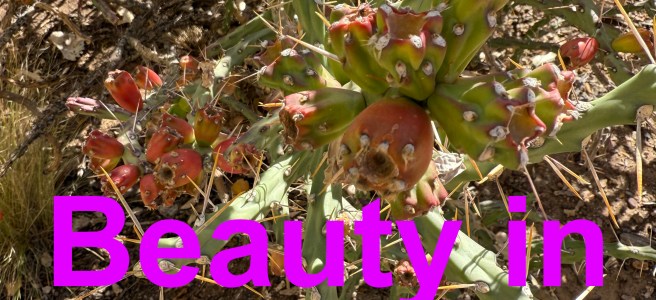
Yet, when I turn to sacred texts, diversity is not a problem but a celebration. In the first creation story of Genesis, as the world takes form, order emerges from chaos, and everything—light and dark, day and night, stars, animals, plants, minerals, and humanity in all its variety—is declared good by the Divine. In fact, on the sixth day, it is called very good.
This reality makes me wonder: why would those who claim to be people of faith reject the beauty of diversity? The biblical text is filled with a celebration of creation’s variety. Jesus himself pointed to the lilies of the field, marveling at their beauty and how they thrive without worry. Yet, in many ways, we have minimized this richness, reducing faith to human concerns, and even further, in the West, elevating certain voices—often those of white men—above all others.
And in doing so, we have missed out. We have overlooked the vast blessing of creation’s diversity. We do not honor the land, water, and air as the sacred gifts they are. We strip mountains bare for minerals, leaving devastation behind. We pollute the streams that sustain life. And if we do not treat creation with care, is it any wonder that we struggle to treat each other with dignity?
Yesterday, I walked past a street littered with trash. I’d love to tell you I picked it all up, but I didn’t. It was cold, and the wind was biting. I saw it and walked on. But it struck me: if we can’t care for something as simple as the ground beneath our feet, how will we ever care for each other? If we continue to abuse the earth, the water, and the air, there will come a time when the earth will endure—but we may not.
I don’t mean to sound apocalyptic, but I do mean to sound a warning. When we fail to see God’s presence in all things, we miss the gift of life itself. Here in the West, we emphasize individualism—my rights, my freedoms, my needs. But we have lost sight of the collective good—not just for humanity, but for all creation.
In the Semitic tradition, one way to understand heaven is through relational connectivity—the sacred interconnection of all things. Yet, we have reduced heaven to a distant place, separate from our lived reality. We fail to recognize that my neighbor is me. If my neighbor suffers, I suffer. But instead of acting with compassion, we live in a world that glorifies harshness.
Perhaps this troubles you as much as it troubles me.
So, I challenge myself and I challenge you: how can we be kind—to nature, to our neighbors, to the world that sustains us? What can we do to create a more just, diverse, and beautiful world? Not a world shaped by fear or dominated by sameness, but one that reflects the fullness of God’s creation. How can we stand up for those who cannot speak for themselves—the earth, the water, the animals, the marginalized?
This is our task. To open our eyes. To celebrate the diversity of all that God has made. To resist the impulse to dominate and instead learn to care, to honor, to connect.
Everywhere we go, the Divine is present. In the grass, in the flowers, in the shifting of the seasons, in the faces of our neighbors. And if we learn to look for the places where we are connected, rather than what divides us, perhaps—like the old Rich Mullins song says—everywhere we go, we will see God.
Until next time, remember: you are infinitely precious and unconditionally loved, just as you are.
With love and blessing.


 Infinitely Precious