
There are moments in life when we begin to treat ourselves less like living beings and more like projects under constant revision.
Maybe it begins innocently enough. We want to improve our health. We want to become more attentive, more productive, more emotionally grounded. We want to grow. Transformation is a natural part of being human. We grow, we learn, we ripen.
But somewhere along the way, many of us quietly begin to believe that we ourselves are the problem.
Recently, I found myself slipping into that mindset. For the past few months, I’ve been trying to care more intentionally for my body through a keto diet, primarily to lower my A1C and pay better attention to my health. And then came a weekend full of uncertainty: a wedding, dinner with friends, meals outside my normal routine. I found myself anxious, checking ketone readings, measuring numbers, worrying whether I had somehow “failed.”
And underneath all of it was a deeper realization:
I had stopped treating my life as something to be lived and started treating myself as a problem to be solved.
I suspect I’m not alone.
We live in a world obsessed with optimization. We measure our sleep, our productivity, our social media engagement, our finances, our bodies, our spirituality, our attention spans. Everything becomes data. Everything becomes performance. Everything becomes improvement.
How do I become more efficient?
More successful?
More attractive?
More disciplined?
More spiritually mature?
More productive?
More optimized?
Even our attempts at healing can become another form of self-criticism.
And slowly, almost without noticing, we begin to divide ourselves into two people:
the broken self and the self trying to fix it.
But what if your life was never meant to be approached as a machine needing constant adjustment?
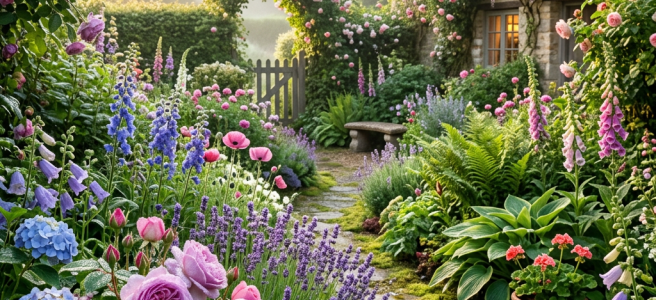
What if your life is more like a garden?
A garden cannot be controlled into perfection. It can only be tended.
You can water it.
You can weed it.
You can plant seeds.
You can create good conditions.
But you cannot force ripening.
Some days there is sunshine.
Some days there is drought.
Some seasons are abundant.
Some feel chaotic and overgrown.
And yet the garden remains worthy of care.
Perhaps the same is true of you.
There are parts of your life still dormant beneath the soil.
There are parts growing wildly in ways you do not yet understand.
There are places in you that feel unfinished, tangled, uncertain, unruly.
But unfinished does not mean worthless.
You are not failing because you are still becoming.
The truth is that wholeness is not the same thing as perfection. The ancient words shalom and shlama point toward something deeper than the absence of conflict. They speak of completeness, integration, belonging, the gathering together of disparate parts into a living harmony.
Not a polished life.
A whole life.
And wholeness begins when we stop standing outside ourselves as critics and begin tending ourselves with compassion.
This does not mean we stop growing.
It does not mean we stop learning.
It does not mean we abandon responsibility for our lives.
It simply means we stop approaching ourselves with hostility.
We stop believing that love must be earned through improvement.
We stop imagining that one more optimization will finally make us worthy.
Because you were never a problem to be solved.
You are already infinitely precious.
Not someday.
Not once you fix yourself.
Not once you become more disciplined, more attractive, more spiritual, more productive, more successful.
Now.
Your life is not a puzzle to complete or a machine to perfect. It is a gift meant to be lived, experienced, and tended with care.
And yes, sometimes you will forget this. Sometimes you will become anxious, self-critical, distracted, or controlling. Sometimes you will miss the moment entirely.
That too is part of being human.
We learn moment by moment.
Sometimes through attention.
Sometimes through the experience of losing attention.
But slowly, gently, we ripen.
And perhaps that is enough.
Remember:
You are infinitely precious and unconditionally loved for the gift you already are.


I love the comparison to a garden. It was perfect… hugs
LikeLike